
Expanding Our School Nutrition Program
Reaching a New Community in Mujuncancha
For the Quispicanchi Project, our nutrition program is the foundation of everything we do. In fact, it was the very first initiative we ever sponsored in the region. What began as a simple effort to provide healthy meals to families during the COVID 19 pandemic has grown into a program that, over the past six years, has served more than 300,000 meals and supported thousands of families across Quispicanchi.
Access to consistent, nutritious food remains one of the most important factors affecting the health, development, and educational success of children in rural Andean communities. For many students, the meals provided through our program are not only important—they are essential.
A Strategic Focus on Underserved Schools
In 2023, we made an important strategic decision to focus our efforts more intentionally on local schools serving highly underserved communities. This shift led to two key partnerships that continue to shape our work today:
Virgen del Rosario School in Sullumayo
CEBE San Antonio, the only special needs school in the region
Through these partnerships, we are able to support students whose families often face significant barriers to accessing nutritious food and basic health services. These schools have become central to our mission of improving child health while supporting educational opportunity in Quispicanchi.
A New Partnership in Mujuncancha
This year, we are excited to announce that our school nutrition program is expanding once again.
Beginning this school year, we will enter into a formal partnership with a small rural school located in the high-Andean village of Mujuncancha.
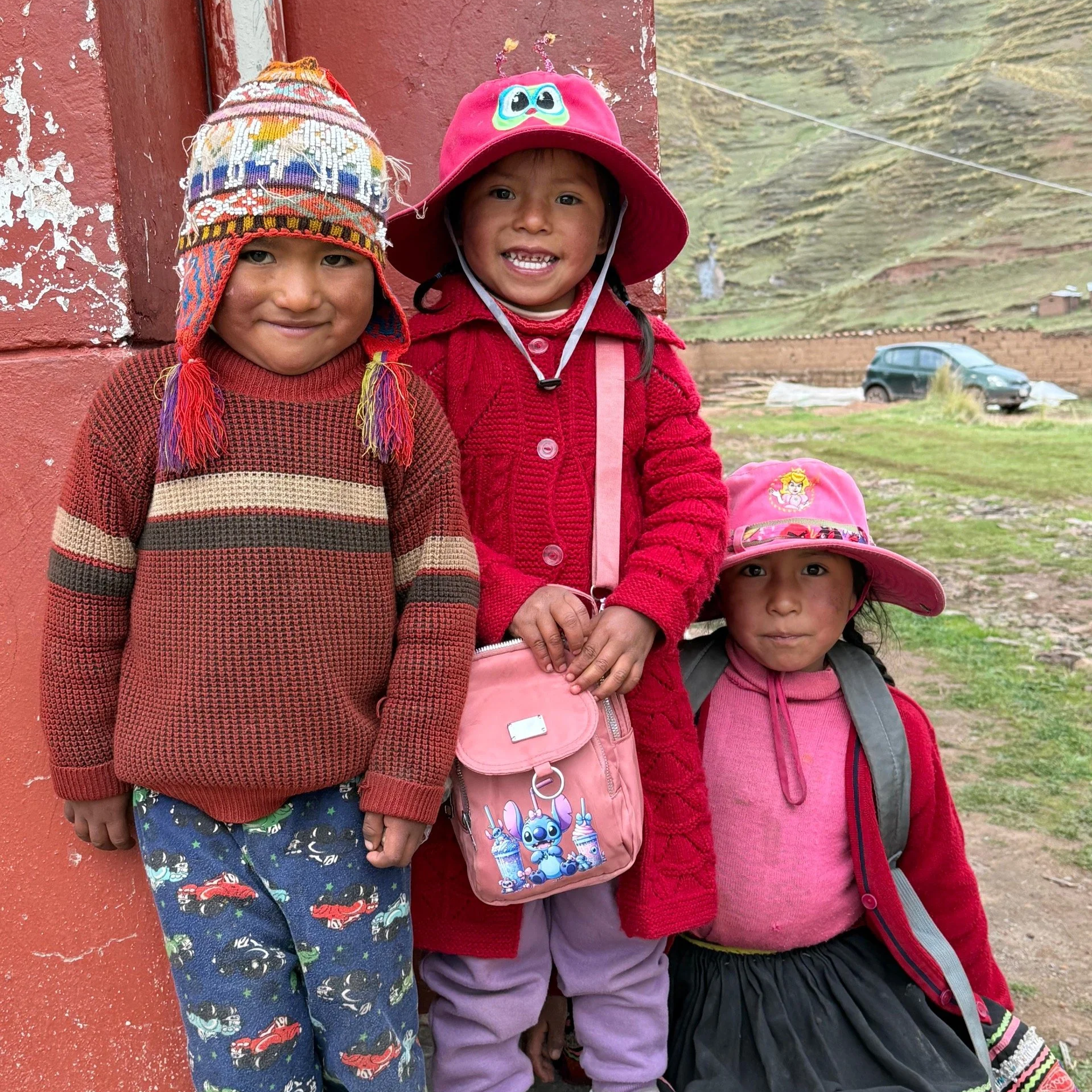
The school is incredibly small—more like a traditional one-room schoolhouse. Currently enrolled are:
10 students in primary school (3 boys and 7 girls)
5 students in the PRONOEI early childhood program (3 boys and 2 girls)
In total, the school currently serves 15 students, with more children expected to enroll in the coming weeks.
While the numbers may seem small, the needs in this community are significant.
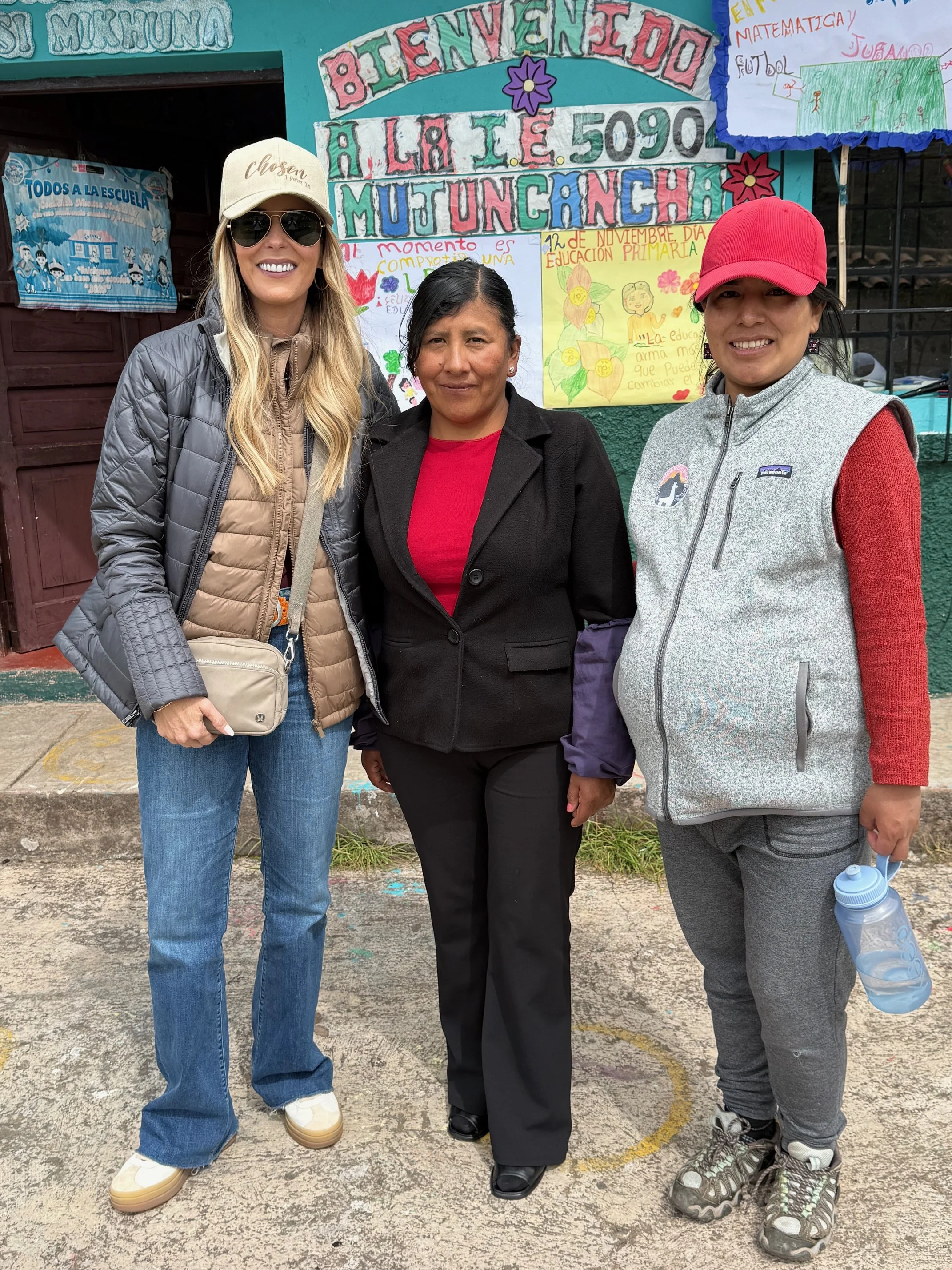
project executive director, Gina House, and Malu Mamani, Project In-Country Director with the school director in Mujuncancha.
Life at 14,000 Feet
Mujuncancha sits more than 14,000 feet above sea level, where life is both beautiful and challenging. The small number of families who make up the community live far apart from one another across the mountains.
Most residents depend on potato farming and raising livestock—including cattle, sheep, and sometimes llamas or other small animals. Families primarily produce food for their own consumption, selling small surpluses in local markets when possible.
Despite the strength and resilience of the community, daily life remains difficult. Many households have little or no access to basic services, including electricity, running water, or reliable sources of nutritious food. These conditions can have a direct impact on the health and development of children.
Fighting Childhood Anemia Through Nutrition
Beginning this year, our team will partner with the Mujuncancha school to provide a healthy daily meal for students and faculty. Each meal will be designed to be rich in iron and protein, helping address one of the most pressing health challenges affecting children in rural Peru: childhood anemia.
Reducing anemia rates among children is a key priority for local and provincial health authorities. To support this goal, our team in Peru will also facilitate regular anemia testing, working in partnership with local health officials to monitor progress and ensure students receive the support they need.
Small School, Big Impact
Although the Mujuncancha school serves only a small number of students, the impact of this partnership could be profound. In communities like this—where resources are scarce and families are geographically isolated—even small programs can make a meaningful difference in the lives of children.
Expanding our nutrition program to Mujuncancha reflects a core belief of the Quispicanchi Project: every child deserves the opportunity to grow healthy, learn well, and pursue a hopeful future—no matter how remote their community may be.
As we begin this new chapter, we are grateful for the supporters whose generosity continues to make this work possible. Together, we look forward to serving many more meals—and many more children—in the years ahead.
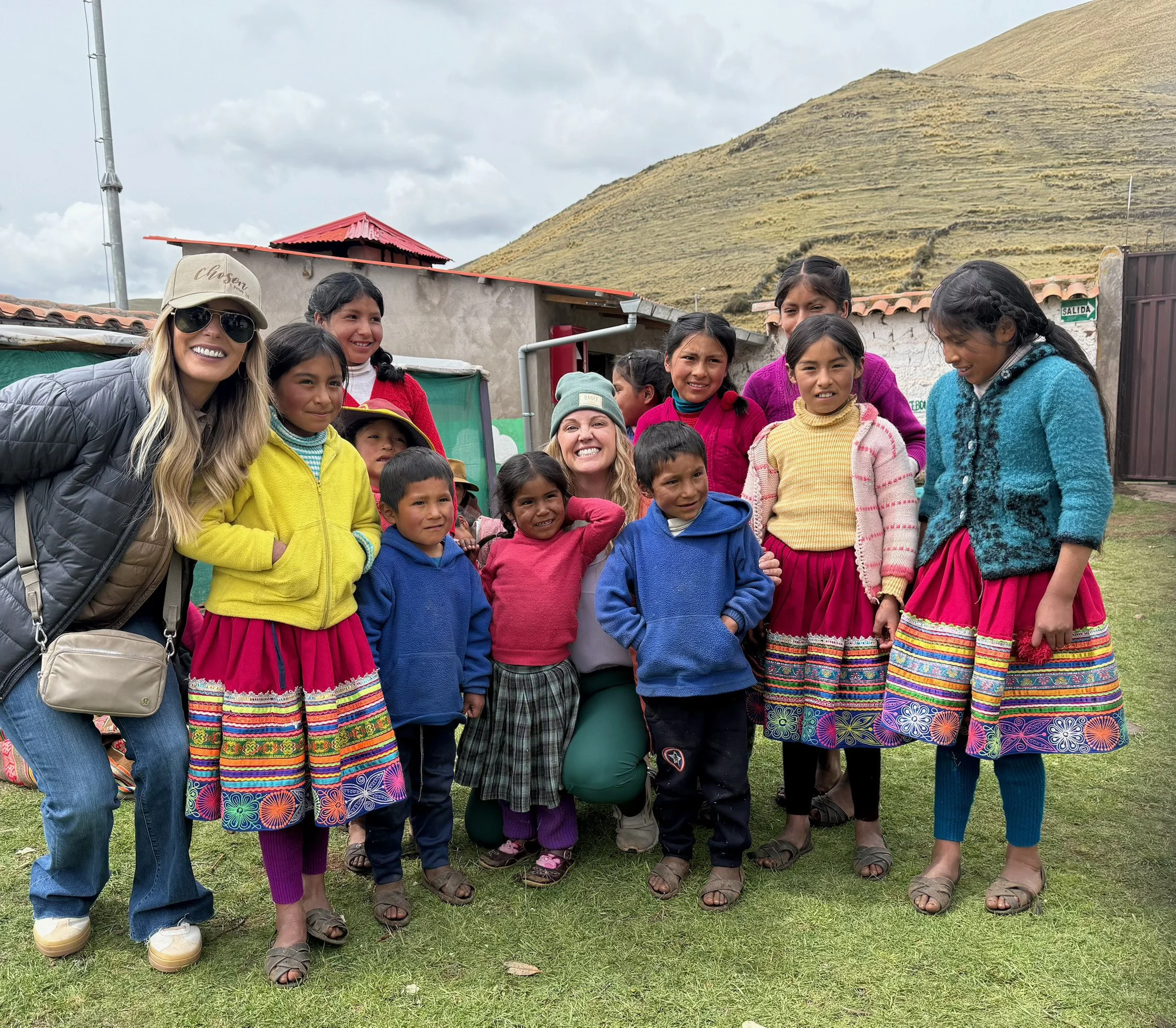
Project Director, Gina House, and Project Advisor, Heidi Jaquith on a school visit in November 2025.